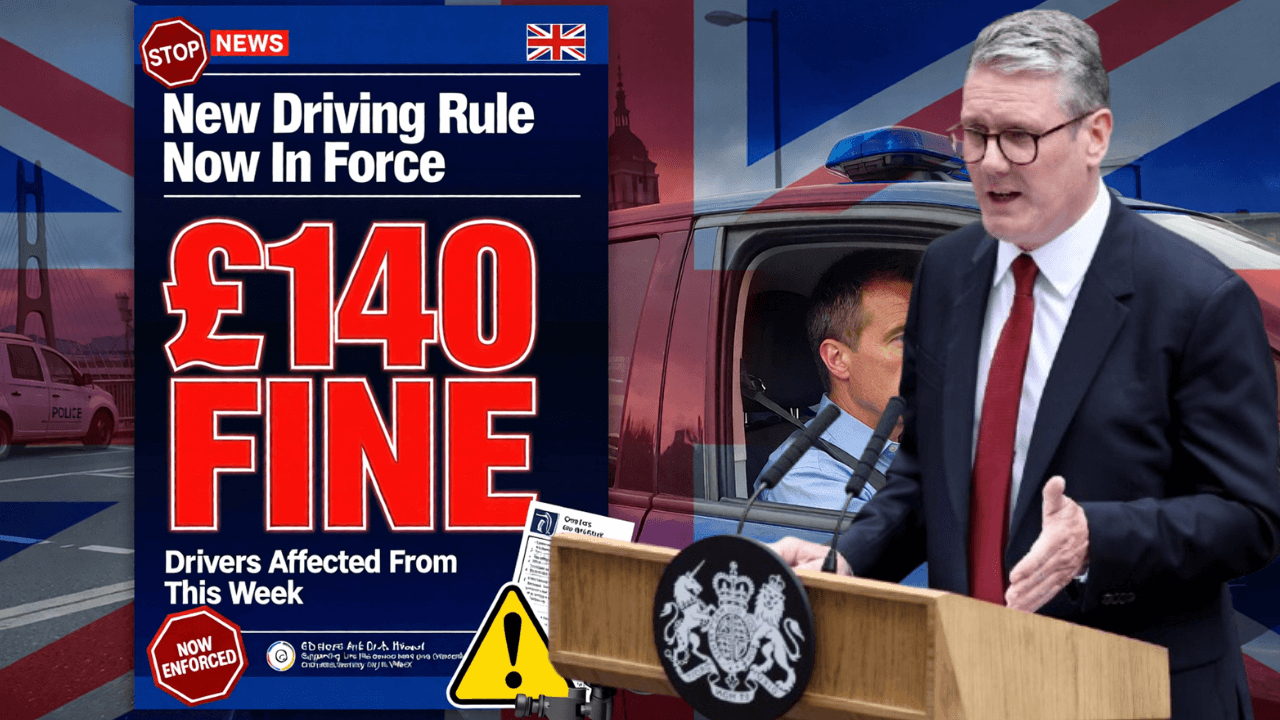
UK drivers are being warned that a £140 fine could apply from this week as a new driving rule officially comes into force, bringing fresh attention to how quickly motoring changes can lead to penalties. The update has already sparked concern online, with many motorists asking whether the fine is automatic, who it applies to, and what exactly drivers must do to avoid being caught out.
While headlines can make it sound like every driver is about to be fined, the reality is usually more specific. A £140 fine is typically linked to particular driving offences, enforcement upgrades, or changes in how rules are applied in certain areas. In many cases, the “new rule” is less about creating an entirely new offence and more about making enforcement stricter or clearer.
This article explains what the £140 fine could relate to, why it is being highlighted as starting from this week, which drivers may be most at risk, and what motorists should check to stay compliant.
Why the £140 fine is suddenly being talked about
Whenever a precise fine amount starts trending online, it immediately catches attention because drivers know penalties can rise quickly once enforcement begins. £140 is also a familiar figure because it matches the kind of fine used in several UK motoring penalty systems, including fixed penalties and discounted early‑payment arrangements.
As a result, many people assume a nationwide change has been made overnight. In practice, most of these updates apply to specific driving behaviours, such as violating traffic restrictions, ignoring updated enforcement signage, or failing to meet rules that are now being checked more aggressively.
This week matters because it marks the point at which the new rule becomes enforceable, meaning drivers can no longer rely on warnings or grace periods in the areas affected.
What “new rule comes into force” usually means
When a rule “comes into force,” it normally means one of two things. Either a brand‑new regulation has been introduced and enforcement begins from a set date, or an existing rule is now being enforced differently because of updated guidance, improved technology, or a change in how penalties are processed.
In everyday driving terms, this could involve changes linked to local traffic orders, the introduction of new camera enforcement, stricter rules around restricted zones, or updates to penalty notices issued by local authorities.
Drivers should be careful not to assume the rule automatically applies across the entire UK. Many enforcement updates apply only in certain towns, councils, or road networks.
Why fines often increase when enforcement changes
Even when the driving behaviour itself has been illegal for years, fines can suddenly become “news” when enforcement changes. This happens because more people start receiving tickets, making it appear like a new law has been introduced.
For example, if more cameras are installed in an area, or if a council introduces stricter monitoring of restricted streets, drivers who were previously getting away with a breach can suddenly face penalties.
This is why motorists often feel caught out “from this week,” even when the offence has existed for a long time.
What types of offences can lead to a £140 fine
A £140 fine is typically associated with penalty structures where there may be a standard amount and a discounted amount for early payment. In some cases, it can also relate to fixed penalties or civil enforcement amounts.
Drivers may face £140 penalties for things such as entering restricted zones incorrectly, failing to follow certain traffic restrictions, breaching rules around bus lanes or certain local schemes, or breaking specific safety‑related rules being actively targeted.
Because penalty levels can differ depending on whether the fine is a police matter or council enforcement, the exact reason can vary. What matters most is that drivers understand the rule behind the penalty and how enforcement is being carried out.
Why some drivers are more at risk than others
Not all motorists face the same risk of being fined. Drivers who travel in city centres, near schools, or through areas with controlled traffic systems are more likely to encounter restrictions that can lead to penalties.
People who commute daily through changing routes are also more exposed, because new signs, temporary restrictions, or modified traffic rules can be introduced without drivers noticing immediately.
Drivers who rely heavily on sat‑nav can be particularly vulnerable, because navigation apps do not always account for local restrictions or recently updated enforcement zones. A route might be shown as available even when restrictions apply at certain times.
Why “from this week” is a key warning
The phrase “from this week” is important because it suggests enforcement begins immediately or that a warning phase has ended. In many cases, local authorities introduce a period where signage is installed first, followed by a time where drivers are educated, and then full fines begin.
Once that enforcement date starts, drivers may start receiving penalty notices without further warnings. That is why so many people become concerned when the phrase is used.
For drivers, the key takeaway is not to assume there will be extra time to adjust. If you drive in an area where enforcement is starting, the safest approach is to read signs carefully and assume rules are active.
How fines are typically issued to drivers
Most fines of this type are issued either through roadside stops in some cases, or through camera enforcement systems where a notice arrives later in the post. Many drivers are surprised because they do not get stopped at the time and only discover the issue days later when a letter arrives.
This creates confusion, because a motorist may have repeated the same route several times before realising it is now triggering penalties.
It is also why drivers should not rely on whether they see police presence. Many modern enforcement systems operate automatically.
What drivers should check immediately to avoid penalties
The fastest way to protect yourself is to check whether the roads you commonly use have any new restrictions. Drivers should pay close attention to updated road signs, temporary notices, and any changes to junction access.
If you frequently drive through town centres or busy areas, it is especially important to watch for updated rules that may restrict certain vehicles, introduce time‑based access limits, or apply fines for entering incorrectly.
Even small details matter, such as the time of day restrictions apply, or whether a vehicle type is exempt. Many fines happen not because a driver intended to break a rule, but because they misunderstood the conditions.
Why signage misunderstandings lead to large numbers of fines
One of the biggest reasons drivers get fined is signage confusion. Some rules are easy to miss in heavy traffic, especially when drivers are watching pedestrians, cyclists and buses.
In some areas, restrictions can apply only during specific hours, meaning a road may appear open at one time but restricted at another. Drivers who are unfamiliar with the area can easily make a mistake without realising.
Clear signage is essential, but even when signs are technically present, they can be overlooked in stressful driving conditions. That is why awareness is so important from the first day enforcement begins.
Why penalties can feel sudden even when rules existed
Many drivers say the biggest shock is that they have driven a route for years without issue and then suddenly get hit with a fine. This is often because enforcement has changed rather than the law itself.
A new camera, updated monitoring, or a shift in council enforcement priorities can create a spike in penalties, making it look like a new rule has appeared overnight.
This does not make the fine feel fair to the driver, but it explains why so many people become aware of a rule only after they receive a notice.
Can drivers appeal a £140 fine
In many cases, drivers can challenge or appeal a penalty if they believe it was issued incorrectly. This can happen if signage was unclear, if there was a genuine mistake in vehicle identification, or if the rule was not properly communicated.
However, appeals must usually be made within strict deadlines. Ignoring a notice can lead to the penalty increasing, which is why it is important to act quickly if you genuinely believe an error has occurred.
Drivers should keep evidence where possible, such as photos of signage or details of the route taken, particularly if they believe the restriction was not properly marked.
Why some fines increase if they are not dealt with
Many penalty systems increase the amount if payment is delayed. Drivers may see a lower amount if they pay early, but a higher amount if they miss the deadline or ignore letters.
This is one reason why £140 becomes a headline amount. It may represent a standard fine level once discounts no longer apply, or it could reflect the amount issued under a specific enforcement policy.
For drivers, the best approach is to understand the timeline, either by paying promptly if the fine is valid or appealing quickly if it is not.
What drivers should not do after hearing about the rule
One of the biggest mistakes drivers make is assuming it will not apply to them. Even careful drivers can be caught out if they drive through areas where enforcement has changed.
Drivers also should not assume they can learn about the rule later by waiting to see if anything happens. By the time the first notice arrives, deadlines can already be running.
Finally, motorists should be cautious about trusting rumours online. Information shared on social media often lacks accurate details, including which areas are affected or what the actual offence is.
Why this warning matters for older drivers and vulnerable motorists
Older drivers and people who drive less frequently may be more vulnerable to rule changes because they may not be keeping up with local road updates as regularly. A driver who only uses the car a few times a week may have less chance to notice changes until it is too late.
Similarly, drivers who rarely travel into city centres can be caught out when they do, especially if they are unaware of restrictions that regular local drivers have already adapted to.
This is why clear, early warnings matter. A fine can be stressful at any age, but it can be especially worrying for people on fixed incomes.
Why enforcement changes often happen at the start of a week
New rules or enforcement updates often start at the beginning of a week because it gives authorities a clear cut‑off date for compliance. It also aligns with operational planning, allowing systems and monitoring to be updated over the weekend.
This is why drivers frequently see phrases like “from Monday” or “from this week” in official announcements. It is not necessarily linked to a national policy change, but to the timing of implementation.
For drivers, the timing simply means there is no delay. If you drive in affected areas, you must assume rules are active immediately.
What the new rule does not mean
It does not mean every UK driver will automatically face a £140 fine. It does not mean the police are stopping every car. It does not mean there is a nationwide ban on normal driving behaviour.
Most of the time, these fines apply only when a specific restriction is breached. Drivers who follow the rules, read signage carefully and avoid restricted routes during active hours will not be affected.
The key issue is awareness, not panic.
Key points to remember
Drivers could face a £140 fine from this week because a new rule has come into force or an existing rule is now being enforced more strictly. The fine is not automatic and will only apply to motorists who breach the relevant restriction or requirement.
The biggest risk comes from misunderstandings, outdated habits, and failure to notice signage changes. Drivers who check routes and pay attention to road signs will significantly reduce the chance of being fined.
Final thoughts
A £140 fine can be a frustrating and expensive surprise, especially if a driver believes they were acting normally. However, most fines like this are linked to specific behaviours and enforcement systems rather than a blanket policy targeting every motorist.
From this week, the most practical response is caution and awareness. Drivers should stay alert for changing signage, check any routes they use regularly, and take official road restrictions seriously. Clear understanding of local driving rules remains the best way to avoid penalties and keep driving stress‑free.